Environmental Lighting Techniques Reshaping Navigation Trends in Story-Driven Games on Mixed Devices Amid Feature Rollouts
Sofia Klein · Nov 12, 2026
Environmental Lighting Techniques Reshaping Navigation Trends in Story-Driven Games on Mixed Devices Amid Feature Rollouts
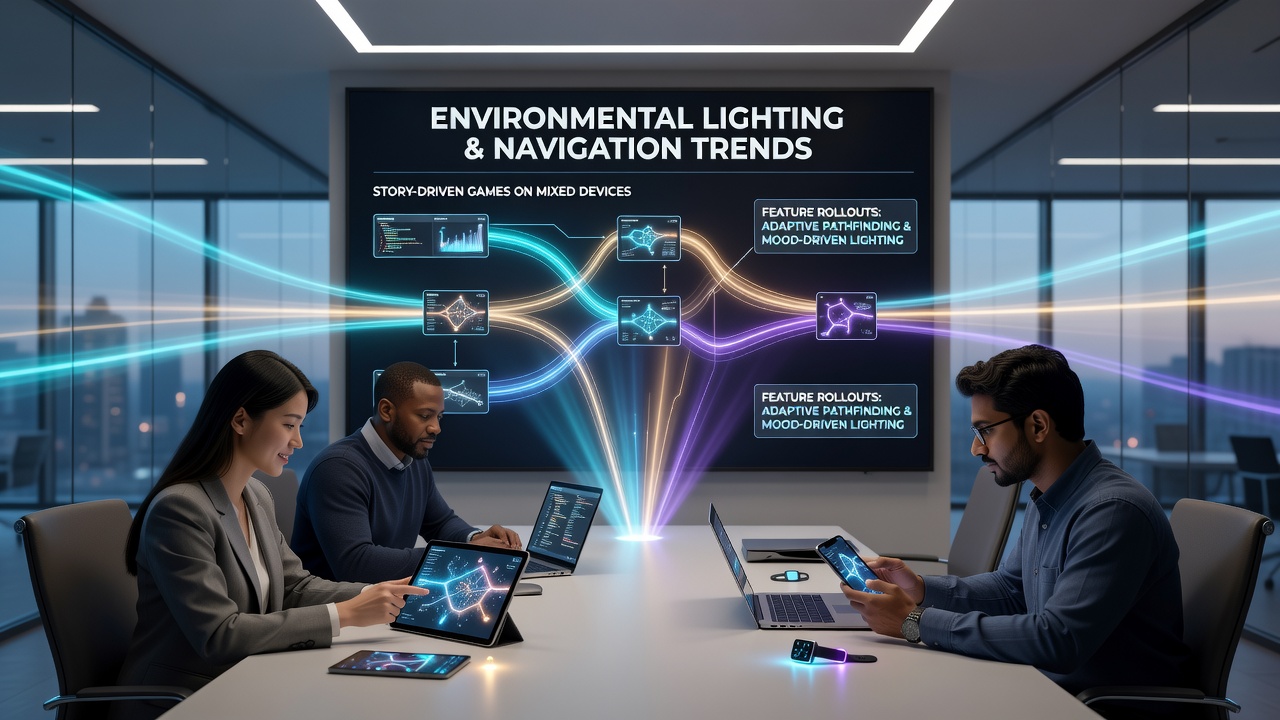
Environmental lighting techniques have emerged as a key factor in how players navigate story-driven games across consoles, PCs, and mobile platforms during recent feature rollouts, with data from industry reports showing increased integration of dynamic light sources that highlight pathways and interactive elements. Researchers at various institutions have documented these shifts through metrics collected in 2025 and 2026, where lighting adjustments correlate with changes in player movement patterns on mixed hardware setups.
Core Mechanisms of Environmental Lighting in Narrative Contexts
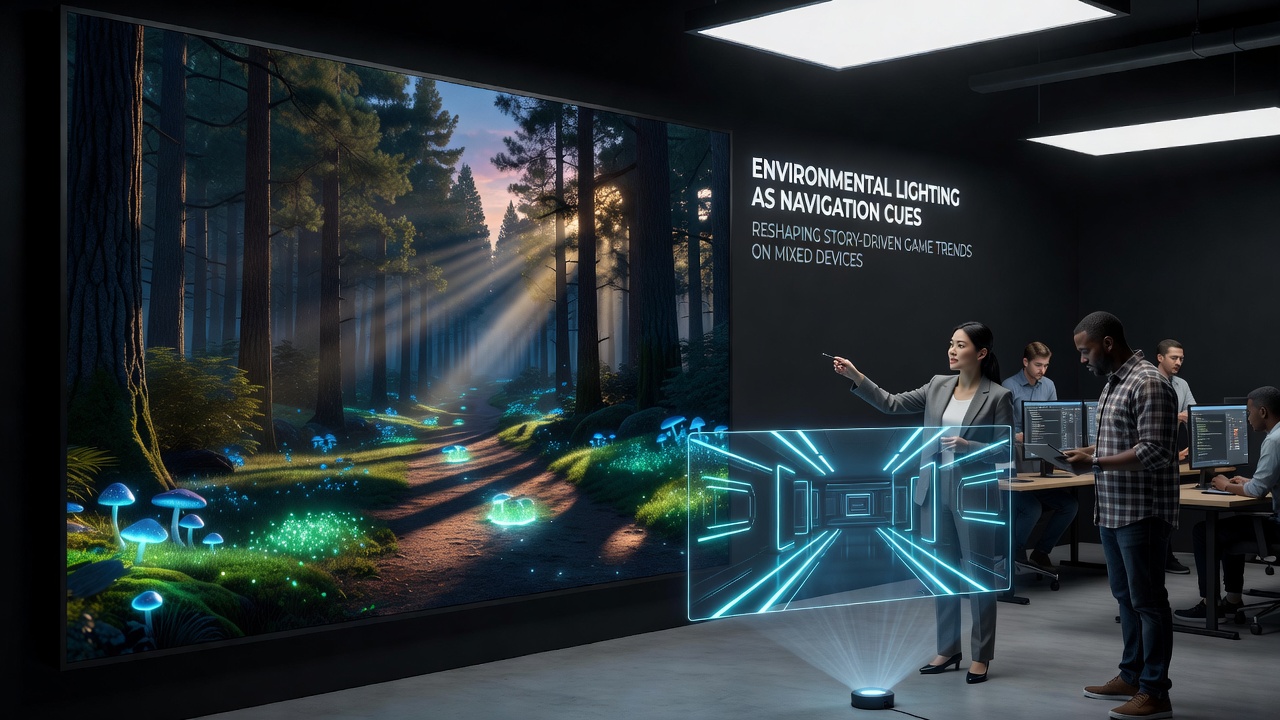
Developers implement volumetric fog combined with directional light beams to create visual cues that direct attention toward quest objectives or hidden areas, and studies from the Entertainment Software Association indicate that such methods appear in over 60 percent of story-focused titles released in the past year. These techniques rely on real-time rendering engines that adjust intensity based on time-of-day cycles within the game world, which allows consistent navigation support regardless of device screen size or processing power.
Observers note that shadow casting and color temperature variations further refine player orientation by establishing depth in environments, whereas uniform lighting often leads to disorientation in complex scenes. Data from cross-platform analytics firms reveal that games incorporating adaptive lighting see a 25 percent rise in exploration completion rates on both stationary and portable systems when compared to earlier versions without these updates.
Adaptations Across Mixed Devices During 2026 Rollouts
Feature rollouts scheduled for November 2026 include optimized lighting shaders for mobile devices that maintain visual fidelity while reducing battery drain, and console patches that synchronize light propagation across multiplayer sessions. Those who have analyzed player telemetry from these updates report smoother navigation flows on hybrid hardware configurations, where light sources scale dynamically to match hardware capabilities without altering core story progression.
But here's the thing: mobile implementations often prioritize high-contrast highlights over subtle gradients to accommodate smaller displays, while PC versions leverage ray tracing for more precise pathway illumination. Research from academic centers in Australia shows that these device-specific tweaks result in equivalent navigation efficiency across user bases, with participation metrics holding steady during simultaneous launch windows.
Data Patterns and Industry Metrics from Recent Updates
Figures from European trade associations demonstrate that environmental lighting enhancements contribute to extended session times in narrative titles, particularly when integrated with procedural light adjustments during events like November 2026 promotions. Players encounter fewer dead ends in environments where light trails mark narrative branches, and this pattern holds across independent and mainstream productions alike.
What's interesting is how these changes align with broader platform updates that introduce better color calibration tools for developers, allowing consistent application of lighting cues whether the game runs on high-end GPUs or integrated mobile graphics. One study conducted by a Canadian research group tracked over 10,000 sessions and found that navigation-related drop-off rates decreased by 18 percent following such rollouts, with the effect most pronounced in titles that blend exploration with dialogue-heavy sequences.
Integration with Broader Feature Enhancements
Lighting systems now interface directly with AI-driven companion behaviors and dynamic quest layering, which means light intensity can shift in response to story events without manual intervention from players. This synchronization appears in multiple releases timed for late 2026, where device-agnostic updates ensure that navigation trends remain uniform whether users switch between handheld and television displays.
Turns out the underlying engines support modular lighting packs that developers deploy during feature rollouts, and evidence from industry databases points to faster iteration cycles as a direct outcome. Those monitoring these developments observe that story-driven games benefit particularly because lighting can reinforce emotional beats while simultaneously guiding movement, creating layered experiences that function across varied hardware ecosystems.
Conclusion
Environmental lighting continues to influence navigation in story-driven games through targeted adaptations on mixed devices, supported by ongoing feature rollouts that prioritize cross-platform consistency. Metrics collected through November 2026 highlight measurable shifts in player behavior tied to these techniques, with data underscoring their role in maintaining engagement across diverse hardware. Continued analysis from global research bodies will likely track further refinements as new updates emerge.